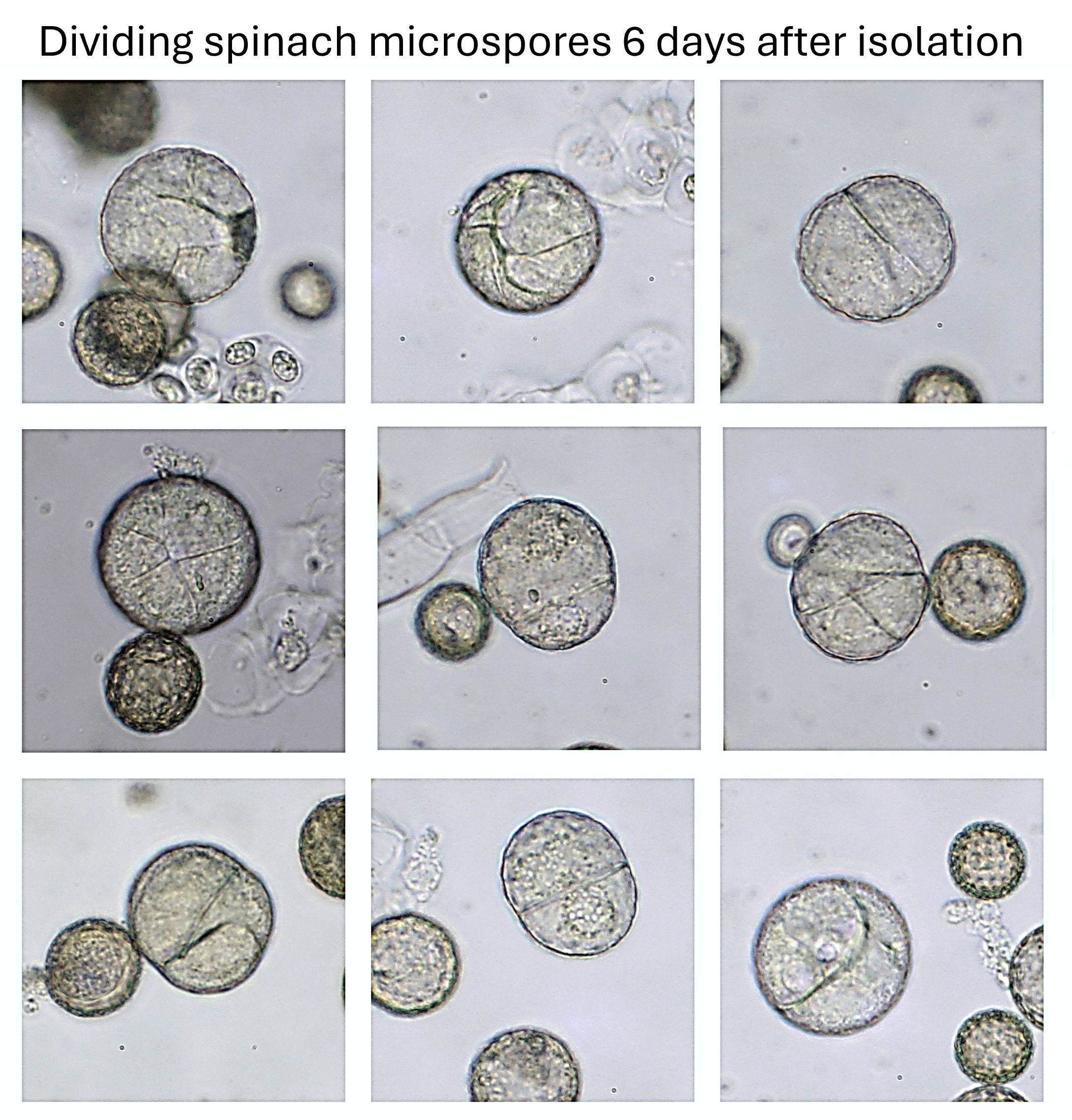
Breeding spinach is challenging due to the presence of monoic, dioic, and hermaphrodite flowering, complicating the production of homozygous lines. Developing doubled haploids in spinach would greatly benefit breeding programs, but this process is difficult. Fytagoras specializes in creating doubled haploid protocols for challenging species. The image shows isolated spinach microspores dividing six days post-isolation, potentially developing into multicellular structures, embryos, and ultimately doubled haploid plants. With expertise in doubled haploid technology and success with crops like tomato and potato, Fytagoras is sought by seed companies for protocol development and doubled haploid plant production.
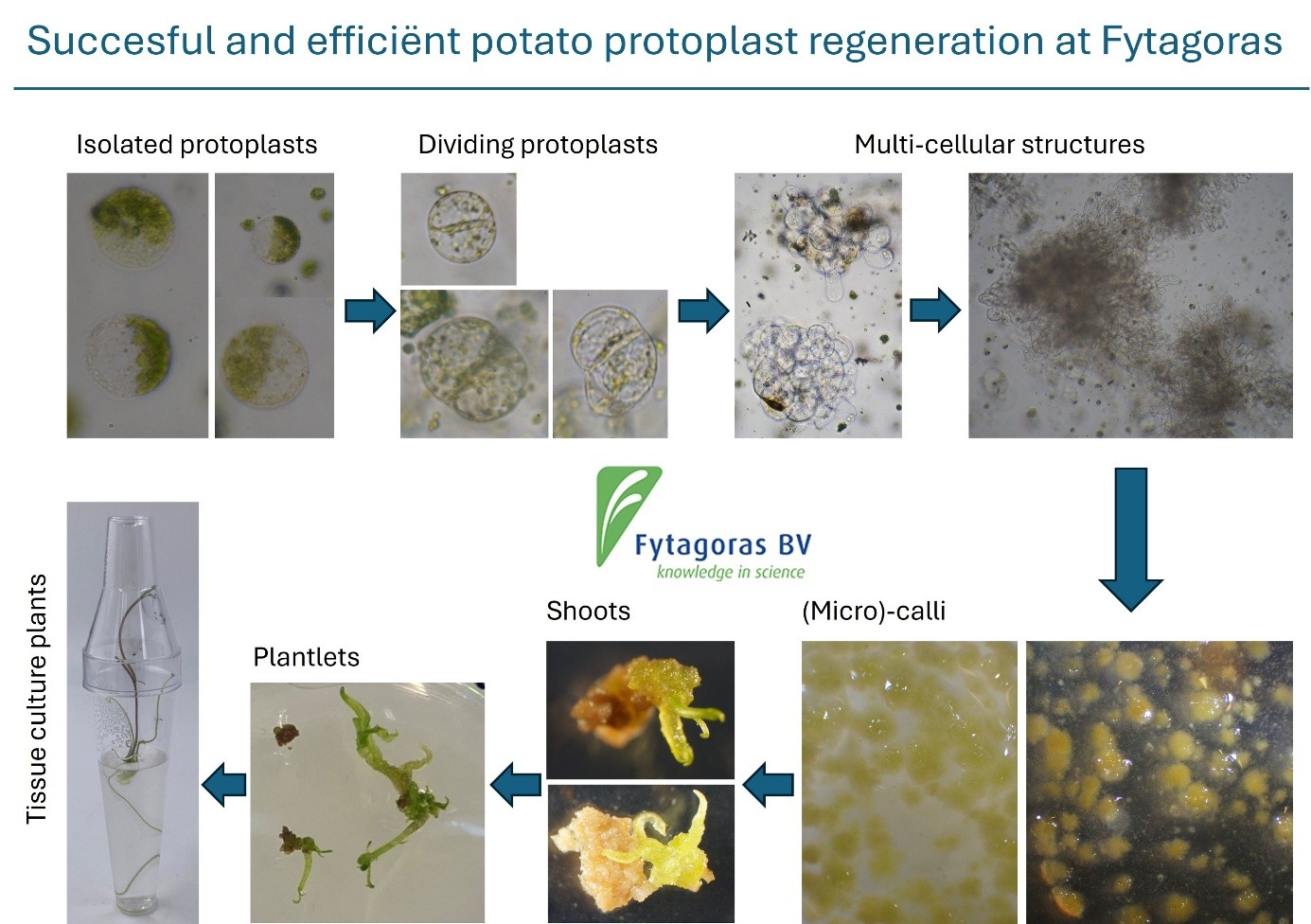
Potato Protoplast Regeneration: an efficient protocol developed at Fytagoras
Fytagoras fully explores the potential of plant cell protoplasts regeneration for recalcitrant crops. Recently at Fytagoras a reliable protocol for